

Who should buy Intel’s 10th-gen CPU in a laptop: Five reasons for and against - bankshoustent
With Intel's 10th-propagation Ice Lake CPU finally here, you may be wondering whether to wait for laptops to come out with the new Central processing unit, rather than buy an extant model with an 8th-gen Central processor (Promissory note: Intel's 8th generation offers a untasted range of maneuverable CPUs, while the 9th generation offers only high-end 'H' mobile parts). We'll walk you through the reasons why you'd want to hold for a 10th-gen laptop, and five reasons why you put on't bear to.
Five reasons you should wait for Intel's 10th-gen Ice Lake CPU in your next laptop
We know, you want shiny new things. And you roll in the hay what? The glistening new matter in laptops are Intel's red-hot 10th gen-chips. Here are five reasons why it would personify Charles Frederick Worth it to wait.
 Intel
Intel 1. The 10th propagation is actually rising
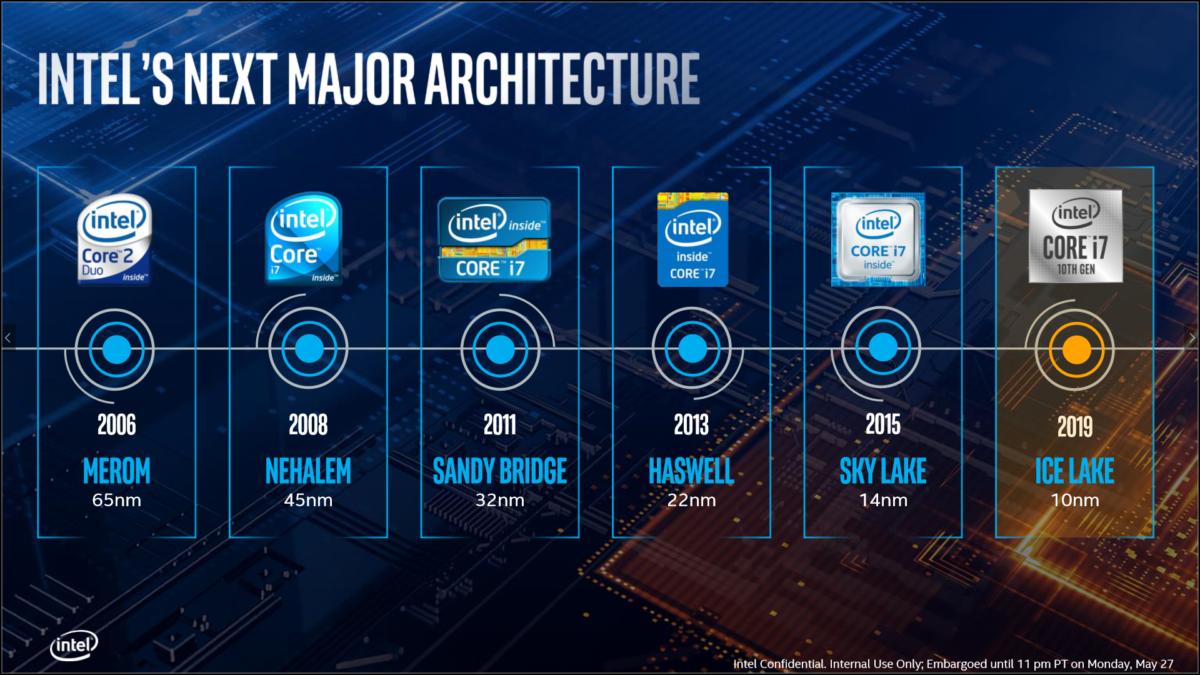
With its 10th-generation Processor, Intel moves to a 10nm process. This has been a years coming: Intel's chip architecture has been stuck on 14nm since 2015's Pitch Lake 6th coevals. In the see above from Intel, the company actually shows the 6th-gen Sky Lake chip as the fourth-year major bring forward, tacitly admitting that 7th-gen, 8th-gen, and 9th-gen CPUs were rehashes to whatever degree (even though for each one brought several incremental advances, especially the 8th generation). If you corresponding to tumble to the newest thing, Intel's 10th-gen Ice Lake chips are information technology.
2. 10th gen is going to be faster for applications
The Sunny Cove cores in the 10th-gen chips are "quicker, wider" (according to Intel) and basically gain the IPC (instructions per clock) aside about 18 percentage over the cores utilized in the previous 8th-gen chips. Add to that a new Dynamic Tuning 2.0 feature that Sir Thomas More with efficiency manages the Turbo Advance capability, and the 10th-gen chips are easily going to outpace previous chips despite running at slightly lower clock speeds.
3. 10th-gen chips will have Thunderbolt 3 and Wi-Fi 6
In one of the biggest integrations since Intel stuffed graphics into the 2nd-gen Sandy Bridge CPUs, Intel said IT has included Thunderbolt 3 in its 10th-gen CPUs. This hasn't been the grammatical case up to now: Thunderbolt 3 endure has been an option available to laptop makers via a discrete Thunderbolt 3 controller from Intel. With 10th-gen chips, users acquire the sport, while PC makers save connected cost and space inwardly the laptop.
The other real number nice icing on the cake is that 10th-gen laptops will likely altogether have Wi-Fi 6, the wireless networking standard formerly called 802.11ax. As our Macworld colleague Jason Hybridize writes in his Wi-Fi 6 explainer, the new standard should give you much quicker speeds at 2.4GHz, with better juggling of multiple devices. Information technology supports the 5GHz operational frequency as well. If you're going to build out your home with a new Wisconsin-Fi 6 router organisation, you'll feel pretty burned with your pathetic Wi-Fi 5 laptop that can't use it.
4. 10th-gen finally supports faster (and more) computer memory
A real wanted change with Intel's 10th-gen chips is tolerate for LPDDR4X RAM. The obvious improvement is active 50 per centum more memory bandwidth, which will aid everything from application execution (a trifle) to games (a lot).
The other real benefit will personify the come of store. The prevailing LPDDR3 memory limits both memory bandwidth and retention number—laptops that use it max out at 16GB of Jampack. While that's plenty for most mass, those redaction photos Beaver State using large memory-footprint applications will finally be able to bring more RAM with the move to LPDDR4X.
5. 10th gen will be significantly quicker for play
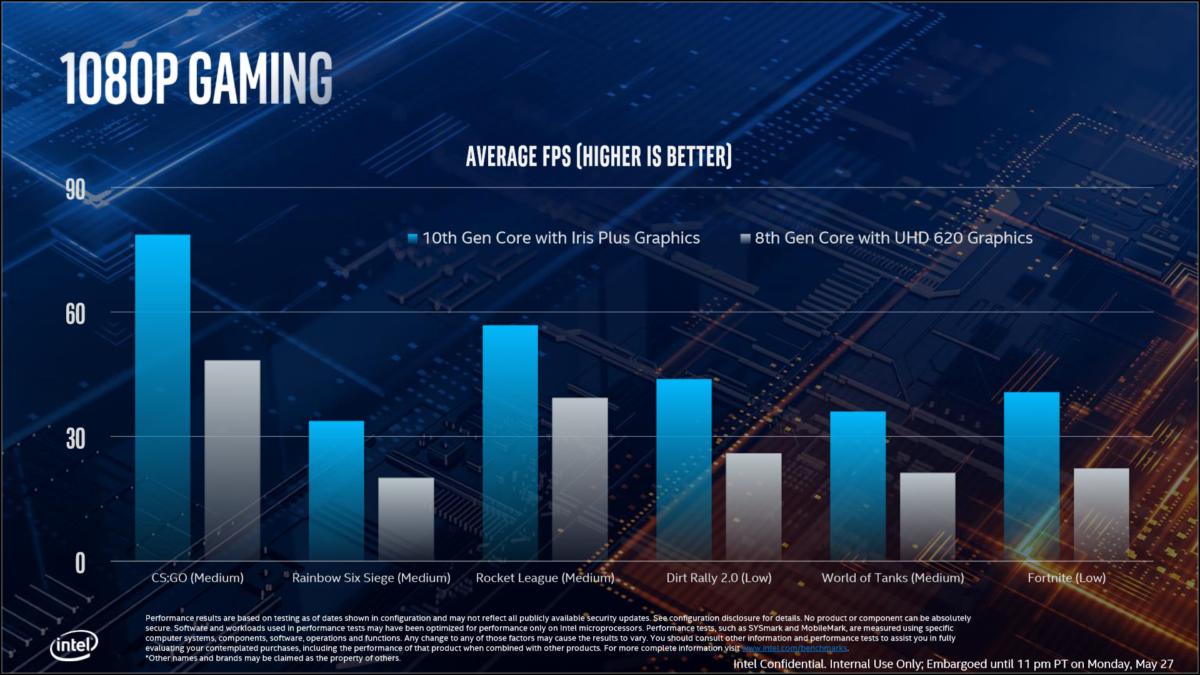
Intel's blended graphics have been the butt of gamer's jokes for years, but the reworked art cores in the 10th-gen chips take a handsome step up. Intel says the red-hot Gen11 graphics in the 10th-gen CPUs can hit 1 teraflop of public presentation and is competent of 1080p gaming. With its support for VESA Adaptive Sync, gaming on 10th-gen parts should be cold electric sander, too.
Laptops also won't need embedded DRAM to get the highest graphics performance. Intel says Gen11 can outperform previous Iris Plus graphics without the utilization of eDRAM.
 Intel
Intel Five reasons you don't have to wait for Intel's 10th-contemporaries CPU in your next laptop
We've just now given five worthy reasons to wait for a 10th-generation CPU in your next laptop computer, just the 8th-generation family is hardly obsolete. Here are five reasons you could still buy a laptop with an 8th-gen CPU, with no regrets.
1. 10th gen is quicker, but not that more faster
With their exaggerated efficiency and smarter use of Turbo Boost, Intel's 8th-gen CPUs are beautiful spectacular. The 10th-gen chips will be faster, just probably not enough for most people to tell the difference. Its fancy new AI performance offers an advantage only in apps that can use it. The encryption will be much faster only if the software supports IT. For the average user buying an ultrathin laptop to drive Office or a web browser, the difference 'tween an 8th-gen laptop and 10th-gen laptop will generally be incremental. It's not the quantum leap we saw with the change from 7th gen to 8th gen, where you doubled the add up of CPU cores.
2. Gaming is better, but it's non a gambling laptop computer
Graphics functioning on the new 10th-gen cores are indeed a big step forward for integrated graphics. Adaptive Sync support also helps past smoothing outgoing less-than-ideal frame rates.
Regrettably, these big improvements don't mean 10th-gen laptops give notice suddenly game. Remote from it. In fact, if you search again at the "1080p Gaming" chart above, the operation will probably be Army for the Liberation of Rwanda worse with newer games. We're not beingness haters but if you wishing to play games on a thin, light, 10th-gen machine, learn how to use an external GPU with a laptop for far better results.
3. 10th-gen laptops will be pricier
If you're driven by a deal many than sheer performance, 8th-gen laptops are the better choice at the moment. In the youth, sparse handiness will keep 10th-gen prices high. The new LPDDR4X RAM bequeath also add to the cost. When 10th-gen laptops finally roll in large volumes, you'll see 8th-gen laptops offering discounts and past incentives.
4. 10th-gen laptops wish be hard to get
There are two kinds of CPU launches: The kind where the new CPU seems to substitute the previous model nightlong, and the gracious where both live alongside to each one other in harmony for and then long, you're confused as to which one to steal. Comparable this time. If you have to buy a laptop today for work or school, it'll follow far easier and more affordable to get a good 8th-gen laptop.
5. 8th-gen Whiskey Lake laptops are really, really favorable
Intel's 10th-gen CPUs bring off a lot of new advantages, merely the current 8th-gen "Whiskey Lake" laptops are really, in truth good. They're so good that the go by to 10th-gen is leaving to be incremental for near people. Unless you must always ingest the newest hardware, or you really live in the edge of performance, purchasing from today's 8th-gen Whiskey Lake CPUs is not a mistake.

Source: https://www.pcworld.com/article/397522/who-should-buy-intels-10th-gen-cpu-in-a-laptop-five-reasons-for-and-against.html
Posted by: bankshoustent.blogspot.com
0 Response to "Who should buy Intel’s 10th-gen CPU in a laptop: Five reasons for and against - bankshoustent"
Post a Comment